 Product
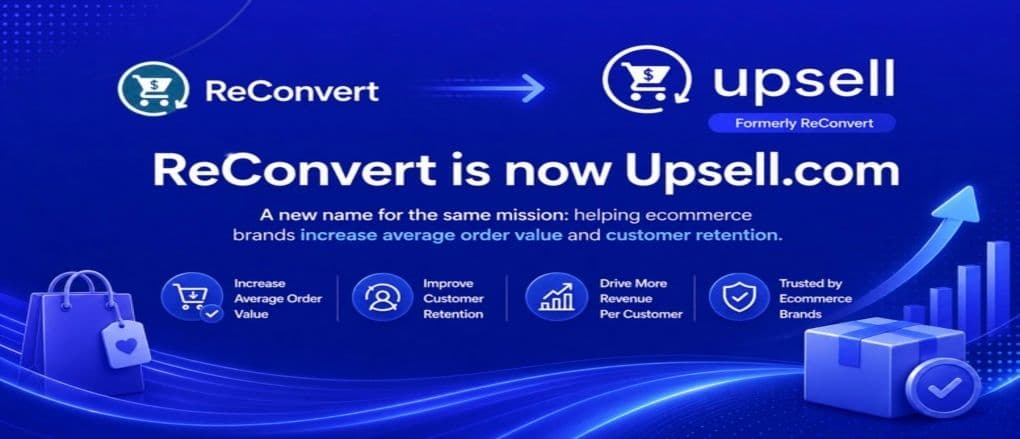
We have rebranded! ReConvert is now Upsell.com
ReConvert has officially become Upsell.com. Here’s what’s changed, what stays the same, and what this means for your Shopify store.
1 min read
As a retailer, you've likely mastered the art of attracting visitors to your store.
But with the costs of acquisition on the rise, maintaining profitability is become more challenging.
That’s where cross-selling comes in - a strategic sales technique that offers customers complementary products or services that align perfectly with their initial purchase.
In this guide, we’ll unpack over 20 cross-selling examples so you can see how cross-selling works in practice.
By the end, you’ll be equipped with the knowledge and insights to master the art of cross-selling like a seasoned pro.
Sounds good? Let’s jump in!
Cross-selling is a sales technique where you offer additional products to customers to compliment their initial purchase.
Probably the most famous cross-selling example in the world is McDonald's ‘Would you like fries with that?’ cross-sell.

Basically, cross-selling is about saying ‘Hey you’re buying this…have you seen this product too?’
You’re recommending products based on identified customer needs, with the aim of encouraging them to spend more money - bumping up your AOV and profitability.
Before we jump into cross-selling examples, let’s quickly clear up any confusion when it comes to cross-selling vs upselling.
In a nutshell, cross-selling focuses on recommending complementary products to customers, upselling focuses on selling more expensive versions of the same product. Both cross-selling and upselling benefits your brand - but they're not the same strategy.
For example, e-bike brand Cowboy upsells customers to the Performance model, which costs $500 more than the Core model.

The key thing with upselling, is that you’re not offering additional products. Simply a more premium version of the same product. Your recommendation is a replacement for their initial choice.
Cross-selling would be recommending additional add-ons. Once a shopper has elected a model, Cowboy then present a number of optional cross-sells such as a lock and a pre-fitted rear rack:

By now you’re probably realizing that cross-selling and upselling techniques can be used in conjunction. Indeed, to maximize your revenue, you should be using both strategies in your store.
To summarize, the core differences between cross-selling and upselling are:
With that difference under our belts, let’s keep going to learn why you should incorporate cross-selling into your sales strategy.
The main reason to implement a cross-selling strategy is because it helps you generate more revenue.
For example, let’s suppose you install ReConvert and use cross-sells to bump your average order value up by $5.
Now, this might not seem like much, but when we run the numbers over the course of year, you can see how big of a difference this makes:

With a few simple cross-sells, we’ve generated 6% more profit margin on this eCommerce store.
And in a time where the cost of customer acquisition is going up, cross-selling allows you to build a more comfortable margin. Cross-selling helps you maximize the value of every sale, and ensure no revenue is left on the table.
Now cross-selling isn't only about bigger profits. As we’ll see in the cross selling examples below, it can also improve your customers shopping experience and get the best value for money.
But before we get to that, let’s quickly run through the best practices that underpin all of the cross-selling examples featured later in the article.
{{cool-component="/style"}}
When you’re building a cross-selling strategy, it’s important to understand the following principles. The four best practices will ensure you get the highest conversion rates without annoying your customers.
The best cross selling examples don’t just force more products on customers. Instead, they create more value.
See, your customer relationships are the most important. So, it’s essential that you build your cross-sells in a way that strengthens customer trust in your brand
Figure out what products or services might enhance the customer experience:
Then ensure your product recommendations help them solve their problems or reach their goals. In this way, cross-selling becomes less about trying to sell more stuff and more about creating greater value for everyone.
Use your research to build customer segments and map your cross-sells to add value to each of them.
With ReConvert, you can build segments based on virtually any characteristic from Shopify’s backend. For example, you could trigger cross-sells based on things like:
Remember, good cross-selling is about relevancy. Proper segmentation ensures that your recommendations meet your customers needs.
It’s rare to create the perfect cross-selling strategy on your first go. So, monitor your results, discover what’s working and double down on it.
You can use ReConvert’s analytics to get insight into how your cross-sells are performing. Track your impressions and conversion rates. Test different offers and triggers until you find a winning combination.
Now that you know what cross-selling is, how it differs from upselling and the best practices, let’s delve into some of the best cross-selling examples. Use these examples to get ideas for your own campaigns.
If you’ve ever been to the convenience store, and thrown gum into your basket as you wait in line, you know what a checkout cross-sell is.
See, shoppers who land on your checkout page are showing high purchase intent. So, it’s fertile ground for a targeted cross-sell.
Here’s an amazing example of a cross-sell at checkout from apparel brand Tentree:

What we love about these Shopify checkout cross-sells is that they’re subtle and non-intrusive. They don't jump out at shoppers and distract them from the checkout process.
We’ve seen ReConvert users get amazing conversion rates on checkout cross-sells by suggesting non-physical products like shipping insurance or priority handling.
After completing a purchase, most customers are directed to the order confirmation page. But with ReConvert’s post purchase funnel feature, you can display a series of special offers to tempt up to 15% of customers into a second purchase.

These offers are insanely powerful because shoppers are in peak buying mode. Plus, shoppers don’t have to re-enter their payment details, so there’s no friction.
You can use ReConvert to create a series of up to three cross-sells, upsells and downsell, depending on how customers respond to your offers.
Your thank you page (also known as ‘order confirmation page’) is another powerful place to add cross-sells. Check out this cross-selling example below:

The beauty of thank you page cross-sells is twofold. First, data from ReConvert shows that customers view the thank you page 2.2 times per order. Secondly, you can use triggers to suggest different products for each visit.
For example, ReConvert user Tushy added a few simple product cross-sells to their thank you page and we’re able to generate an additional $191,786/mo in sales for pretty much no extra effort.
📚Read more: How Tushy used thank you page cross-sells to generate an extra $191,786/mo.
{{cool-component="/style"}}
The next cross-selling example comes from cosmetics brand Native. Native have a pop-up on their product pages that suggests complimentary products.

There’s several things this pop-up nails that you can copy when designing your own:
All in all, this is an excellent example of cross-selling that you can learn from and implement in your store.
This example of upselling comes from Harry’s, a D2C cosmetics brands built around men’s razors. Harry’s use their cart page to cleverly suggest related products to those in the customers cart.

The cross-sells are placed beneath the fold at the bottom of the cart contents, so the shoppers sees them as they scroll down to study the items in their cart.
It’s very subtle, and doesn’t distract the visitor from continuing to Checkout.
This matters, because at this stage of the conversion funnel, you want to avoid anything that might interrupt the user from progressing forwards towards purchase.
There’s no point in having seemingly ‘high converting’ cross-sells, if they’re actually cannibalizing more revenue from your overall sales.
Some of the best Shopify stores are removing cart pages and replacing them with cart drawers only. This helps create a shorter conversion journey - and the theory is that removing this extra step leads to more sales.
But does that mean you have to get rid of your cart page cross-sells? No! In this cross-selling example, we see how coffee machine brand Ratio adds their product suggestions to the cart drawer:
Upsell.com helps you increase AOV with targeted offers across the full shopping journey, from product and cart to checkout, post purchase, and beyond.

This is a nice targeted cross-sell which offers shoppers a grinder to compliment their new coffee machine. For me, this cross-sell is a little expensive - the suggested product is almost 50% the total price of the cart, which likely puts the total basket value outside the shoppers initial budget.
However, if you scroll across, you’ll find a selection of products ranging from filter papers ($10) to a glass serving carafe ($75). This spread of pricing on cross-sells is wise as it increases the chances of appealing to a wide-range of budgets.
In all the cross-selling examples discussed so far, we’ve talked about cross-selling in your store.
However, email is another useful channel to leverage cross-selling, and few understand this better than eCommerce titan Amazon:

Amazon includes personalized recommendations on their transactional emails. Such emails tend to get a very high open rate which makes them ideal for suggesting cross-sells.
This is a similar strategy to suggesting products on your thank you page. And while we think that thank you page is superior, it makes sense to combine both for maximum impact.
Transactional emails aren’t the only place you can cross-sell products. It’s a good idea to add product suggestions to your welcome emails too like uniform retailer Matalan does:

In fact, you can add cross-sells to many of your Shopify email marketing flows. For example, you can use ReConvert to collect customer birthday’s on the thank you page, and then send subscribers discounted cross-sells based on products they’ve already purchased from you.
Try including personalized product recommendation widgets in your emails and see how your audience responds.
If you’re running a shopify clothing store, you can use ‘complete the look’ cross-sells to encourage shoppers to buy a complete outfit. Sports equipment brand Adidas does this on all of their product pages:

It’s a particularly potent tactic if you’ve invested in professional styling and photography. A model wearing a styled outfit helps give shoppers ideas of how to pair the items in your store.
The next cross-sell example is an age-old AOV-boosting tactic. Bundling products into a full package is a great way to ensure customers get everything they need, while at the same time, generating more revenue for your store.

Lots of brands incorporate product bundling into their sales strategy. It reduces the amount of research shoppers need to do, and enhances their product experience.
One of the keys to product bundling is to offer a discount like coffee machine brand Bruvu does. I.e. it should be cheaper for a customer to buy the bundle, as opposed to selecting all of the constituent parts individually.

Another great product bundling example comes from Harry’s. Their full skincare bundle is also cheaper than buying items individually. And at the same time, it’s designed for men who may not know what products they need to create a skincare routine - so they don’t have to navigate the confusing world of cosmetics, when they can get it all in the one place, from a brand they trust.

Amazon too uses product bundling on every page. Amazon’s powerful algorithms study what other customers have bought and presents personalized bundles on each product page.
Of all the cross-selling examples on this list, few will have as big a profit margin as non-physical products.
Services like insurance, extended warranties and priority shipping are typically high margin cross-sells. While digital products such as e-books, video courses, and subscriptions are all virtually 100% profit margin, once they’re created.
For example, look at how cowboy cross-sells insurance subscription to customers who are buying a relatively expensive bike.

If we theoretically assume that Cowboy sells these bikes for 100% margin, then the cost to them for bike replacement is around €1,250.
Even if 1 in every 10 bikes was stolen and claimed for, they’d still be somewhere around breakeven. And I think it’s fair to say that in an average city, less than 10% of bikes are stolen in a given year.
So, think about your own business, what kind of services and digital goods can you cross-sell? Even a few products like this, offered at checkout or post-purchase can have a serious impact on your bottom line.

Now that we’ve covered a range of cross-selling examples, let’s look at one case in particular to illustrate the power of cross-selling in real life.
Tushy sell bidets. Now that might sound like a crazy idea. But that didn’t phase Miki Agrawal and the passionate team at Tushy who, for the past six years, have been reimagining how consumers use the loo.
The cost of delivering a stand-out customer experience (stellar products, ongoing support) can quickly eat up margins.
Tushy realized this early on. Rather than skimp on product quality, they quickly looked for ways to increase their average order value and bump up profitability.
But after looking at various upsell and cross-sell solutions for Shopify, they found that most seemed to impede the customer’s experience.
ReConvert empowered Tushy to shift their cross-sell offers to the thank you page and create a smoother front-end buyer's journey.
Tushy figured out which products customers were likely to buy together and set up specific thank you page triggers and recommendations based on customer behavior.
Tushy used Reconvert’s cross-selling widget to offer complimentary high-margin products such as toilet paper and towels directly on their thank you page.
Tushy's use of triggers to personalize offers paid off big time. Using ReConvert, Tushy transformed their AOV and were able to achieve:
So far we’ve examined cross-selling in an eCommerce context. However, it’s also useful to study cross-selling examples from other fields to help inform our strategy.
Let’s look at a few examples from in-store retail, to B2B sales. Notice how the core principles of cross-selling we discussed earlier, all still apply here.
Let’s run through a few more examples of cross-selling in emails from brands to give you inspiration for your own campaigns:
The beautiful cross-selling email example comes from Dollar Shave Club - a subscription razor box for men. In this email they make it super simple to add additional cross-sells to the customers cart.

This super simple email cross-sell example comes from Mack Weldon. In this email they request a review for a product that a customer previously purchased, however at the bottom they include a ‘Customers who bo
ProductReConvert has officially become Upsell.com. Here’s what’s changed, what stays the same, and what this means for your Shopify store.
 Marketing
You don’t need a huge budget to get your business or brand noticed. Our online marketing ideas for small businesses are designed to maximize ROI.
 Marketing
eCommerce marketing automation allows you to free up time, provide a better experience, and ultimately, make more sales. Discover 10 simple, but proven eCommerce marketing automation examples you can implement to take your store to the next level.
Get eCommerce insights that convert
One email a month, practical strategies on conversion, AOV, retention, and customer experience.