 Marketing
10 Practical Marketing Ideas For Small Businesses
You don’t need a huge budget to get your business or brand noticed. Our online marketing ideas for small businesses are designed to maximize ROI.
Black Friday isn't a day anymore. It's six weeks where a huge share of your year's revenue comes through the door at once, and most merchants spend all of it on ads and discounts while leaving money on the table right after the sale is already won. The upsell is the cheapest growth lever you have this quarter, because the customer is already there, already paying, and already saying yes — the same way Amazon never lets a checkout pass without one more relevant suggestion.
So let's get into exactly what to set up, and when, before the rush hits. These numbers come from real, anonymized data recorded across thousands of Shopify stores running Upsell.com (formerly ReConvert) — not a forecast, but what actually happened during last year's BFCM season.
Here's what the data says, before the checklist:
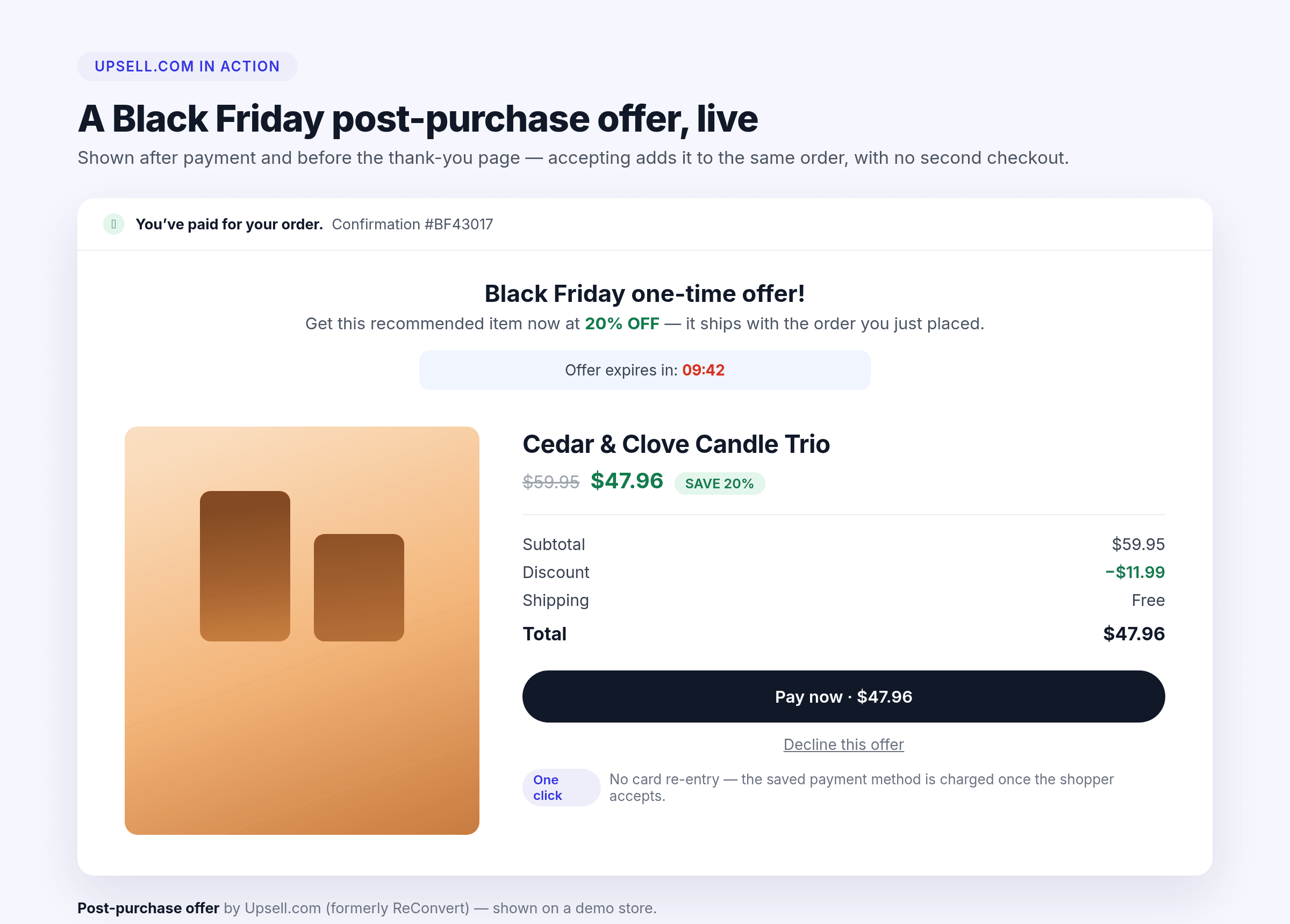
A post-purchase offer is a one-time deal a customer sees on the page right after they've paid — before the thank-you page even loads. It's not a popup trying to talk someone into buying; the sale is already closed. Think of it as a post-purchase email with a 100% open rate, except the customer is already on your site, card in hand, one click from yes. eBay and AliExpress lean on the same logic right after checkout on their marketplaces: once someone's committed, a relevant add-on is an easy yes rather than a hard sell. A skincare store running a holiday sale might show a $12 travel-size companion product at 20% off, right there on the confirmation flow, before the customer's attention moves anywhere else.
An announcement bar is a slim, sticky bar that carries a message, a discount, and a live countdown timer. Upsell.com's announcement bar runs where it converts hardest: on your thank-you page and order status page, right after a customer has bought — and the discount it carries is auto-applied and follows the customer back into the store for their next order. During BFCM, that countdown does real work: it turns "there's a sale" into "there's a sale that ends at midnight," which is the difference between a shopper browsing today and a shopper buying today.
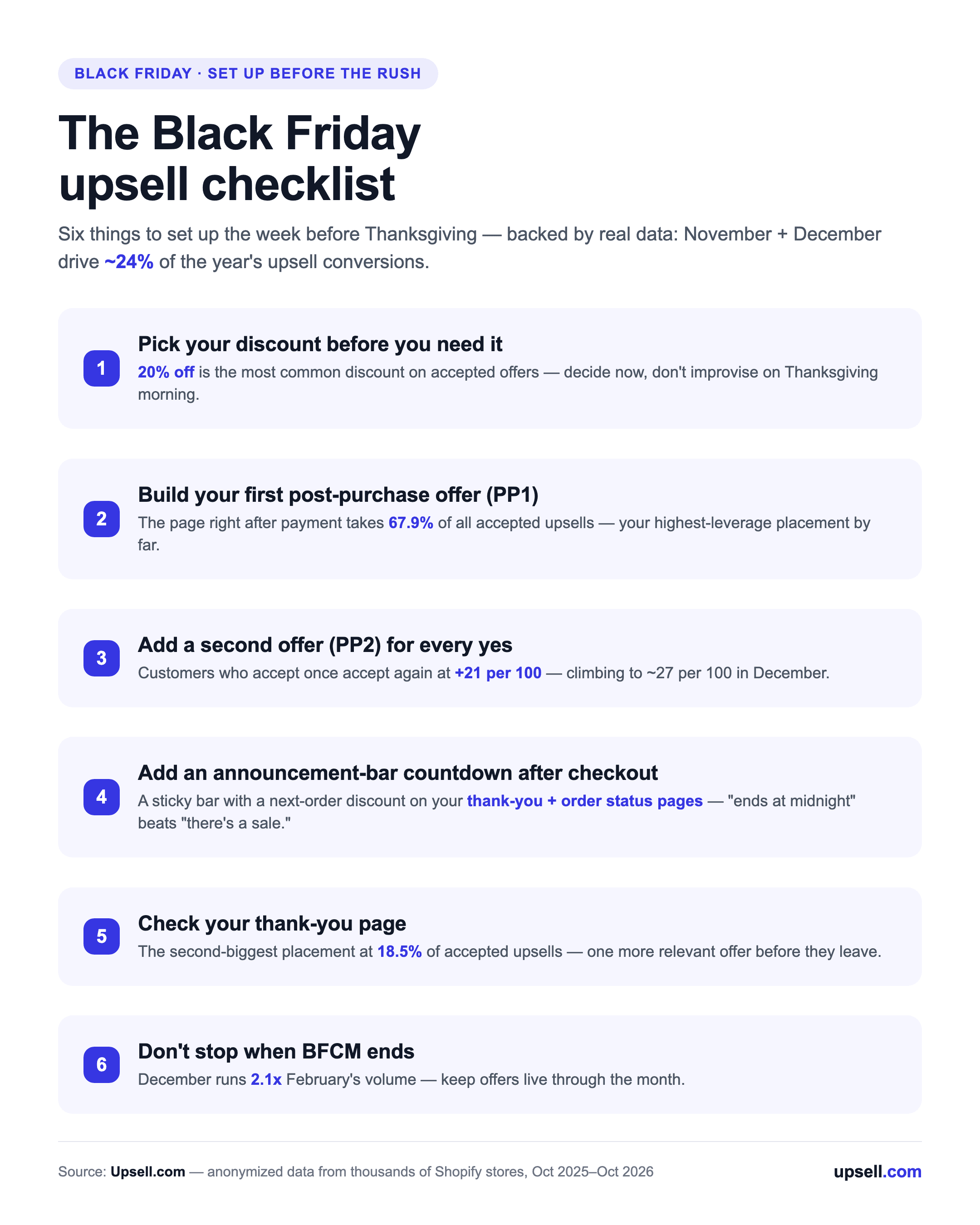
Set this up the week before Thanksgiving, not during it. Here's the order that matches how shoppers actually move through your store this time of year:
Picture a home-goods store running a 25%-off storewide sale for the long weekend. The storewide discount gets the customer to buy once. The post-purchase offer is what happens next: a candle set at 20% off, shown only after the order is already placed, to a shopper who's already decided they trust this store enough to pay. No ad spend, no extra traffic, just a second yes from someone who already said the first one. Here's exactly what that looks like:
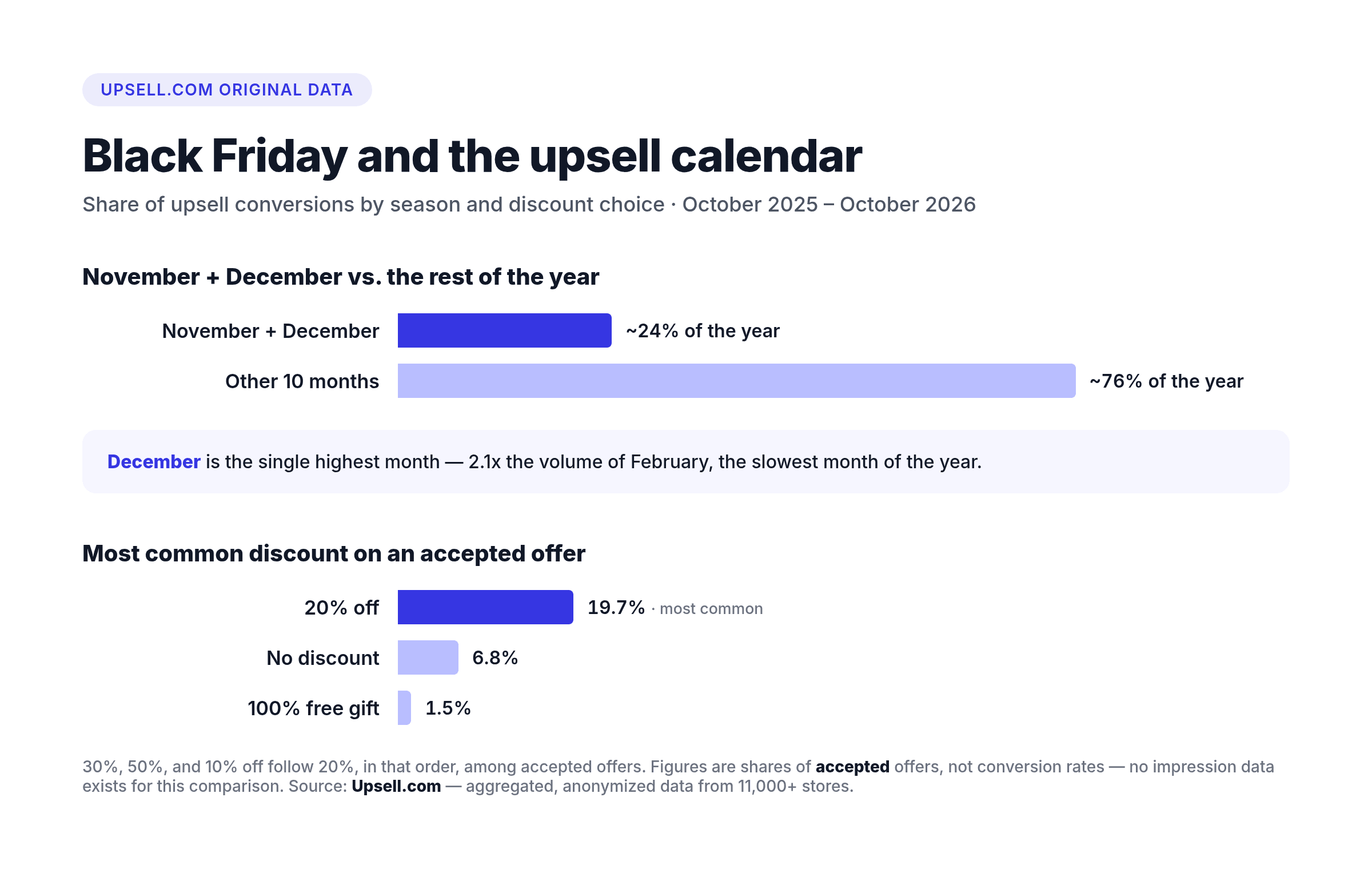
Post-purchase offers already account for 67.9% of every accepted upsell on Upsell.com (formerly ReConvert) — before you spend a single extra dollar on Black Friday traffic, that's the placement already earning the most.
If you haven't run a BFCM season with post-purchase offers before, here's a step-by-step walkthrough of setting the whole funnel up. And if you want the full picture of where every upsell converts, not just post-purchase, our 2026 statistics report breaks down all seven placements.
None of this requires new tools if you're already using Upsell.com (formerly ReConvert) — PP1, PP2, the thank-you page widget, and the announcement bar all live in the same app. If you're not running it yet, install Upsell.com free from the Shopify App Store and have offers live before Thanksgiving week.
Upsell.com helps you increase AOV with targeted offers across the full shopping journey, from product and cart to checkout, post purchase, and beyond.
The week before Thanksgiving, at the latest. Post-purchase offers, discount codes, and the announcement-bar countdown all take minutes to configure, but you want a few days to test the checkout and post-purchase flow before volume ramps up.
20% off is the most common choice among merchants on Upsell.com, used on 19.7% of accepted offers — a solid starting point if you don't already have your own tested number. 30%, 50%, and 10% off follow, in that order.
Yes — customers who accept a first offer accept a second one at roughly +21 per 100 on top, and that rate climbs to about 27 per 100 in December specifically.
It's the second-biggest placement after post-purchase offers, at 18.5% of all accepted upsells, so yes — it's worth a look even if PP1 and PP2 are your priority.
Not necessarily different offers, but don't wind down after Black Friday weekend. December is the highest-volume month of the year, 2.1x February, so keep the same setup running through the month.
The statistics in this article come from real, anonymized data recorded across thousands of Shopify stores running Upsell.com (formerly ReConvert) between October 2025 and October 2026. Placement and discount figures are shares of offers customers actually accepted, not conversion rates, since no impression-level data exists for this comparison yet. To cite these numbers, link back to this page or to our full 2026 statistics report.
MarketingYou don’t need a huge budget to get your business or brand noticed. Our online marketing ideas for small businesses are designed to maximize ROI.
 Product
ReConvert has officially become Upsell.com. Here’s what’s changed, what stays the same, and what this means for your Shopify store.
 Marketing
eCommerce marketing automation allows you to free up time, provide a better experience, and ultimately, make more sales. Discover 10 simple, but proven eCommerce marketing automation examples you can implement to take your store to the next level.