 Product
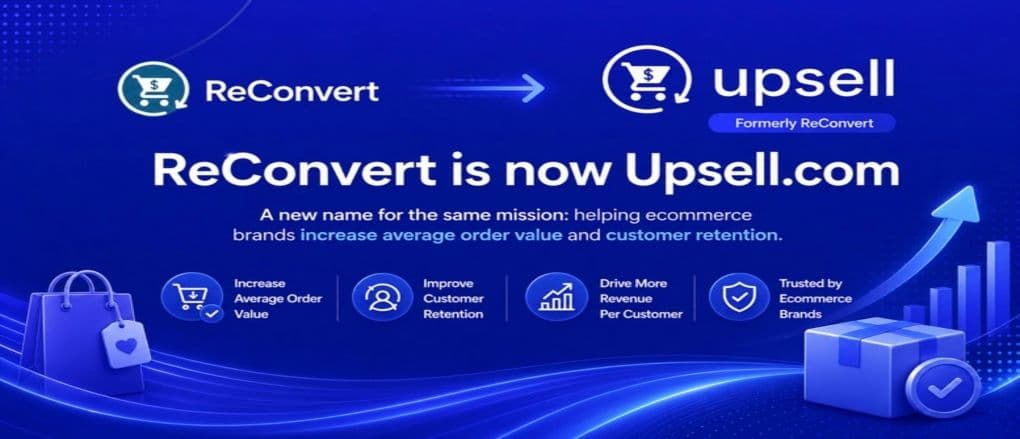
We have rebranded! ReConvert is now Upsell.com
ReConvert has officially become Upsell.com. Here’s what’s changed, what stays the same, and what this means for your Shopify store.
1 min read
Writing an eCommerce return policy is one of the less glamorous aspects of running an online store.
But having a solid eCommerce return policy is an essential part of your business strategy.
An overly relaxed (or overly stringent) policy can lower your conversion rates, slash your profits and leave customers feeling unhappy.
With 49% of consumers saying they check a store’s return policy before buying, it’s imperative that you get it right.
But the thing is: lots of merchants don’t know where to start.
In this post, we’ll cover some eCommerce return policy best practices that’ll slap a smile on your customers’ faces.
Plus, at the end, you’ll get an eCommerce return policy template to get you started.
But before all that, let’s look at some return statistics to see how your business stacks up.
According to Statista, the overall retail rate for online and in-store purchases is 10.6% in the US. That means for roughly every ten sales you make, one of them will be sent back.
However, when we look at eCommerce specifically, returns become much more significant.
David Sobie, the founder of Happy Returns, states that between 10-40% of all online purchases get returned (and around holidays, these figures can double).
Such figures indicate that eCommerce returns aren’t a minor irregularity that occasionally requires your attention.
Instead, they’re an inherent part of doing business online – one that you need to plan for and manage appropriately.
Creating a great returns experience impacts customer satisfaction. A study from UPS revealed that 73% of shoppers say the returns experience influences how likely they are to buy again.
Right now, around 67% of US customers say that their returns experience is ‘easy’ or ‘very easy. While this figure isn’t bad, it certainly leaves room for improvement.
To maximize customer happiness (and profits), giving 100% of customers a painless returns experience should be your goal.
Every retailer knows that managing returns can be a headache.
As if the loss of revenue wasn’t painful enough, returns can also be a logistical nightmare.
And given that 6% of returns are fraudulent (or abuse of policy), your natural reaction is to dissuade customers from returning items at all.
However, making all customers jump through hoops because of a few rotten eggs isn’t the best approach.
For example, a whopping 55% of customers say they won’t shop with retailers with inflexible return policies.
Here are two reasons why your returns policy matters:
In truth, your eCommerce return policy is part of the ‘trust complex’ that puts shopper’s concerns at ease and boost conversions.
After all, shoppers can’t physically hold your products. They’re basing their purchase decisions off imperfect information – so before they pull the trigger, they need to trust your brand.
A robust return policy shows customers that you stand by your products, that you understand their concerns, and that you care about their experience. Having a good eCommerce return policy will drive sales and boost customer satisfaction.
According to a study from the Journal of Marketing, customers who get free returns are between 58% – 357% more likely to repurchase within 24 months.
That’s huge – it means that even if customers weren’t happy with their order, making it easy for them to return the product gives you a great chance of turning them into a customer for life.
Seriously, in an increasingly competitive eCommerce environment, creating a band of loyal customers is becoming more critical than ever.
And loyalty is earned by providing a shopping experience that your competitors can’t compete with.
It can be tempting to throw together your returns policy as an afterthought (or worse, just copy and paste it from somewhere else).
But hopefully, we’ve made a case for investing time into crafting a policy that makes customers happy without giving away half your profits.
Remember, up to 40% of your customers will return an item. That means it’s a pivotal opportunity to set yourself apart from the competition.
With that in mind, here are seven best practices to keep in mind:
Before you write, zoom out and look at the big picture.
Too many merchants view returns solely through the lens of lost revenue.
But such a narrow focus overlooks the hidden opportunity returns present – more loyalty and higher retention.
So, instead of simply looking to reduce the number of returns and maximize short-term revenue, your policy should enhance the overall customer experience.
For inspiration, you need to look no further than customer-centric shoe retailer Zappos.

In a recent customer service video interview, Zappo’s executive, Craig Adkins, told Fast Company:
“Our best customers have the highest return rates, but they also spend the most money and generate the most profits.”
According to Zappos, their highest-spending customers ultimately return around 50% of everything they order.
But the thing is, they keep ordering precisely because the returns process is so simple.
You don’t have to go to an extreme like 365-day Free returns.
However, shifting your perspective from ‘how can we minimize returns at all costs’ to ‘returns are inevitable, how can we best capitalize on them?’ is essential to crafting the best policy.
As one of the pioneers of the generous return policy, LL Bean, said: “As a business practice, generous returns are costly, but as advertising, they’re as cheap as it gets.”
When it comes to return policies, for some reason, techno-babble, and corporate-speak reign supreme.
This is weird because phrases like ‘sole discretion, ‘the bearer’s entitlements’ do nothing but alienate your customers.
Seriously, complex legal jargon just makes it you look like you’re hiding something.
As a counter-example, check out how shoe brand All-birds writes their return policy in plain language, maintaining their brand voice throughout.

The clarity of AllBird’s page is refreshing in comparison to most return policies.
Speaking of brand tone, another excellent example of how to talk to your customers like real humans comes from swimwear brand Chubbies:

What’s also great about chubbies’ page is that they’ve included only the bare minimum.
They’ve linked to an additional page with more detailed returns information – but only if specific customers need it.
This linking tactic keeps most customers from going to war with an unnecessary wall-of-text and streamlines the return experience.
Six out of every ten online shoppers look for your return policy before buying.
That puts your return policy just behind product reviews in terms of its ability to impact conversions.
So, whatever you do, don’t hide your returns policy away in the bowels of your store.
At a minimum, stick a link to your policy in your store’s main navigation menu plus one in the footer.
But if you’ve got a generous policy, don’t be afraid to flaunt it in other places, too, like your homepage and product pages.
For example, check how Outdoor Voices announces their both ‘Free Returns’ using a site banner and above the product page CTA.

Clicking on these links brings you to their simple but effective return’s FAQ, where customers can instantly learn how returning a product works:

It’s also a good idea to link to your return policy on your thank you page and in your order confirmation emails for maximum visibility.

If you’re concerned that making your returns visible might encourage more of them, don’t be.
Remember, the majority of customers will look for your return policy anyway.
Plus, nudging customers to keep purchases they’re not happy with is a poor strategy to foster long-term loyalty.
Instead, communicate your return terms clearly and let your customers make up their minds about their order to avoid disappointment down the line.
Along with getting your return policy out in the open, you must also effectively manage your customer’s expectations around returns.
So, far we’ve extolled the benefits of generous return policies and their impact on long-term growth.
However, depending on your specific circumstances, a super-generous policy might not be feasible.
It’s important to outline exactly how your returns work – for example:
The main thing here is not to promise the world and let customers down later. Most customers are reasonable and will accept your conditions if you’re clear about them.
Upsell.com helps you increase AOV with targeted offers across the full shopping journey, from product and cart to checkout, post purchase, and beyond.

See here how Untuckit clearly states that customer returns must be unworn and unwashed, or they won’t accept them.
Also, notice in bold red lettering that “Final sale items cannot be returned or exchanged.”
Basically, the idea is that if you need to have a stricter returns policy, that’s ok. Just make sure the conditions are clearly stated.
It’s always better to under-promise and give your staff leeway to make things right rather than overpromising and under-delivering.
Setting the right expectations early on means that customers won’t feel duped later on.
When drafting your return policy, it’s essential to make sure you’re not causing cash-flow problems for yourself.
It’s impossible to focus on retention and have a long-term view if your overly generous return policy is eroding your profits.
So, rather than being generous for the sake of it, leverage your customer data to find the most generous you can be while still protecting your bottom line.
It’s also vital to build a strategy for dealing with the small segment serial returners who do the most damage to your profit margins.
Such customers usually fall into one of two categories:
As you scale, using a tool like Shopify Flow (available in Shopify Plus) or a CRM to segment and tag offending customers automatically is critical here.
You can reduce the risk of ‘fitting roomers’ using apps like Returnly – which allows “shoppers to buy again using a credit before shipping an item back.”
For ‘wardrobers,’ you can exclude them from free shipping initiatives or even take a leaf out of Amazon’s book and outright ban customers who submit too many returns requests.
Above all else, customers dislike high-effort shopping experiences.
A staggering 96% of customers that endure high-effort experiences do not become repeat purchasers.
When you compare this with only 9% of customers with low-effort experiences, the importance of streamlining the return process is obvious.
Low effort experiences are crucial across the entire customer lifecycle, but especially in the context of returns.
A good rule of thumb is that it should be as easy for a customer to return a product as it was for them to buy it.
Self-service is a great option that helps customers return items efficiently while also easing the burden on your support team.
GymShark uses ReBound Returns which looks very similar to their checkout:

Customers simply input their details, print out a shipping label and drop their items off at their nearest collection point.
When writing your policy, think about how you can lower the effort required to complete a return on your store.
With returns, don’t be afraid to think outside the box.
While straight refunds are what customers want most of the time, alternatives like store credit and exchanges can attenuate profit losses.
The key is to add an incentive for shoppers to choose an exchange or store credit over a refund.
Here’s a fantastic example from Chubbies, where they nudge customers to opt for an exchange by giving them an additional $10 if they choose to shop now.

By making the exchange option more attractive, Chubbies no donut converts several customers to this option and holds onto the revenue rather than refund it.
Ok, we’ve covered a lot above.
If your head is chock-full of information, and you just want to get started, here’s the seven-step guide to drafting your first return policy:
Once you’ve got all these details worked out, you’ll be ready to combine them into a cohesive return policy that works for you and your customers.
So, we’ve talked about how to write an eCommerce return policy.
Specifically, we stressed the importance of not using your policy as a proxy to dissuade shoppers from returning stuff.
The good news is that there are several tactics to help reduce returns before a customer orders.
It goes without saying, but the more accurate your product descriptions, the better. Include as much detail as possible, so customers know what they’re buying.
For inspiration, check how Everlane lets users see how clothes fit on multiple different sized models:

This approach gives shoppers an idea about how the clothes look on different body types so they don’t order the wrong item.
Think about how you can help shoppers get a clear picture of your products before they buy and watch your returns rate start to tumble.
If products keep getting returned regularly, you likely have a problem.
When customers initiate a return, ask them the reason for sending the product back.
Tease out trends (‘smaller than I expected’) and adjust your product listings accordingly.
Offering a longer return window sounds counterintuitive. However, only 5% of customers return an item 30 days or more after purchase.
With a shorter window, like 14 days, you add unintentional urgency to the shopper’s decision which results in them returning their purchase.
However, stretch that period out, and customers don’t feel the need to rush. Many of them will decide to hang onto the purchase instead, while others may simply forget they ever bought it.
Similar to product descriptions, reviews give customers an insight into other shopper’s experiences with the product.

Reviews provide valuable insight into what it’s like to own/wear/use your products and help customers make the right decision. They’re also great for boosting conversions via social proof.
Start collecting them if you haven’t already.
Lastly, you can’t underestimate the power of fantastic support.
A detailed FAQ section along with friendly agents helps customers along every stage of the buyer’s journey.

Pre-purchase, an excellent support team guides shoppers towards the best products for their needs.
Post-purchase support helps troubleshoot issues that arise and get quick resolutions so customers can enjoy their products rather than return them.
We've compiled all the point in this post into a handy eCommerce return policy template for you to use on your store.
Just remember to customize it so it makes sense logistically for your specific store.
As eCommerce continues to grow, the number of returns is rocketing in tandem.
As a merchant, it’s essential to prepare by creating a policy that meets customer expectations while also protecting company profits.
Remember, when a customer returns an item, it isn’t a loss for your business. Instead, it’s a powerful opportunity to flip a negative customer experience into a positive one.
Businesses with return policies that make it easy for customers to return products stand to gain massively in the long run.
ProductReConvert has officially become Upsell.com. Here’s what’s changed, what stays the same, and what this means for your Shopify store.
 Marketing
Personalizing your buyers journey is a fantastic way to boost conversions. Discover 6 simple ecommerce personalization tactics to try today.
 Marketing
You don’t need a huge budget to get your business or brand noticed. Our online marketing ideas for small businesses are designed to maximize ROI.
Get eCommerce insights that convert
One email a month, practical strategies on conversion, AOV, retention, and customer experience.