 Product
We have rebranded! ReConvert is now Upsell.com
ReConvert has officially become Upsell.com. Here’s what’s changed, what stays the same, and what this means for your Shopify store.
1 min read
Here’s a riddle…
What erodes your bottom line, makes you feel powerless, and causes your hair to turn prematurely grey?
If you said a ‘Shopify chargeback’, you’re right.
As a merchant, you’ve likely been there. A juicy order pings into your phone. You get excited. You ship it quickly.
Then, a month later, you realize that the card used was stolen. Or the order was damaged in transit. Or something else unexpected has happened.
Cue sinking gut feeling.
But here’s the thing: chargebacks don’t need to be a regular occurrence.
If you know how to handle high-risk orders appropriately, you can drastically reduce the number of chargebacks you get.
By the end, you’ll have the knowledge you need to minimize your risk, protect your revenue, and keep calm when chargebacks do inevitably occur.
Ready to jump in? Let’s go.
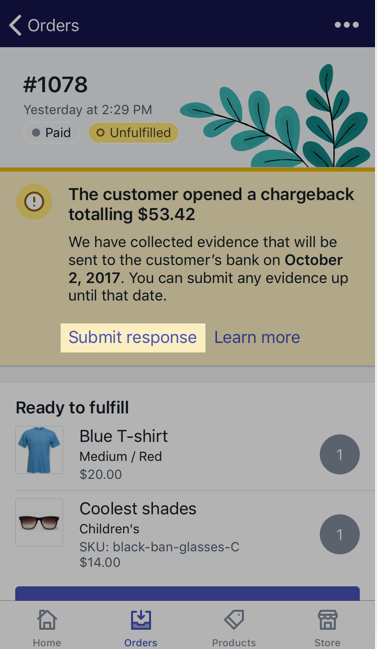
A chargeback occurs when a card issuer reverses a transaction and returns money from your account to your customer’s account.
The card issuer does this in response to a customer dispute about their order.
Chargebacks are a protection mechanism for consumers against fraud and unscrupulous merchants.
For example, if a customer is getting ripped off or didn’t authorize a transaction, a chargeback is a safety net that allows them to recoup their lost funds.
When a customer lodges a chargeback dispute, your payment gateway will give you a chance to prove that the dispute is invalid.
In most cases, customers (not merchants) win chargeback disputes unless there is irrefutable evidence to support the merchant’s case.
Unfortunately, as a Shopify merchant, handling chargebacks is an annoying part of doing business.
If you’re making sales, you’ll eventually run into a scenario where a customer initiates a Shopify chargeback.
There are a few reasons why a customer might initiate a Shopify chargeback dispute against your store:
.png)
Once a dispute is filed, a case gets opened against you in your payment processor account (PayPal, Stripe, Authorize.net, etc.)
If the customer wins one of the above disputes, the amount they paid for their order will be returned to their account from your account. They’ll also get to keep whatever product you’ve sent them (if it arrived).
If you win, which rarely happens, you get to hold onto the money, and the customer receives no compensation.

Often, the reasons for a Shopify chargeback are somewhat within your control.
For example, if a customer orders a product and it doesn’t arrive, and they can’t reach your support, they’re likely to initiate a chargeback.
But often, you’ll suffer chargebacks because a customer’s card details were stolen and used to purchase something from your store. The only way to combat this type of Shopify chargeback is to learn how to spot high-risk orders.
The following are red flags that should prompt you to investigate an order for suspected fraud:
Of course, none of these red flags mean an order is definitely fraudulent. Many times customers make mistakes. We’ve all entered the incorrect card details, for example.
But when you see one of these unusual characteristics (or indeed if you see more than one), it means that you shouldn’t proceed as usual. You should investigate that order further.
The truth is that once a chargeback dispute is initiated, your chances of winning the case are slim.
Upsell.com helps you increase AOV with targeted offers across the full shopping journey, from product and cart to checkout, post purchase, and beyond.
That’s why a better goal should is to prevent chargebacks before they happen. Here’s a system to help you verify genuine orders while also protecting your bottom line against unwelcome chargebacks.
Luckily Shopify has an excellent in-built fraud detection system that ranks orders as low, medium, and high risk.
If an order has a medium or a high risk, then it’s flagged on the Orders page with a warning symbol next to the order number.
Shopify also has a detailed set of indicators that you can view from your Shopify backend.
Green indicators show you that nothing is amiss, while red suggests you should investigate that area.
.png)
In general, any order that’s medium or high risk (and especially high-risk) needs to be thoroughly investigated.
If you want to be on the safe side, it might be worth simply canceling all high-risk orders and redirecting your energy to investigate medium-risk orders instead.
Once you’ve determined that an order may be suspect, the next step is to reach out to the customer and ask them to provide you with a copy of the following:
These requests might seem a little excessive, especially if the order was placed by a genuine customer. But these three files are essential if you want to win a chargeback down the line.
So, try to be as cordial as possible and explain the situation to the customer. Tell them why their order was flagged as risky. Most of the time, genuine customers will understand your concern.
If an order is only medium-risk, you can try two less forward methods that may help you determine its authenticity before requesting the full complement of documents:
If you’re dealing with just one or two high-risk orders per week, you can get away with following up with customers individually.
But once you start to sell at scale, investigating every risky order will rapidly consume large chunks of your valuable time.
That’s where automation comes in.
Because Shopify can detect most high-risk orders, you can use this as a trigger to run automations that save you buckets of manual effort.
One example is to use ReConvert to show a special thank-you page message to customers who’ve placed a high-risk order.
This can explain to customers what’s happened and outline what additional verifications are needed to ship their order.
Another idea is to reach out with email and SMS automations. Again you want to make sure you remind customers their order won’t be shipped until they comply with your security requests.
Finally, if you’re on Shopify Plus, you can use Shopify Flow to set-up an automation that will automatically cancel orders from customers who haven’t responded within a given time-frame.
While Shopify’s fraud detection system is suitable for most stores, if you want to step things up a notch, consider using a dedicated app for an extra layer of security.
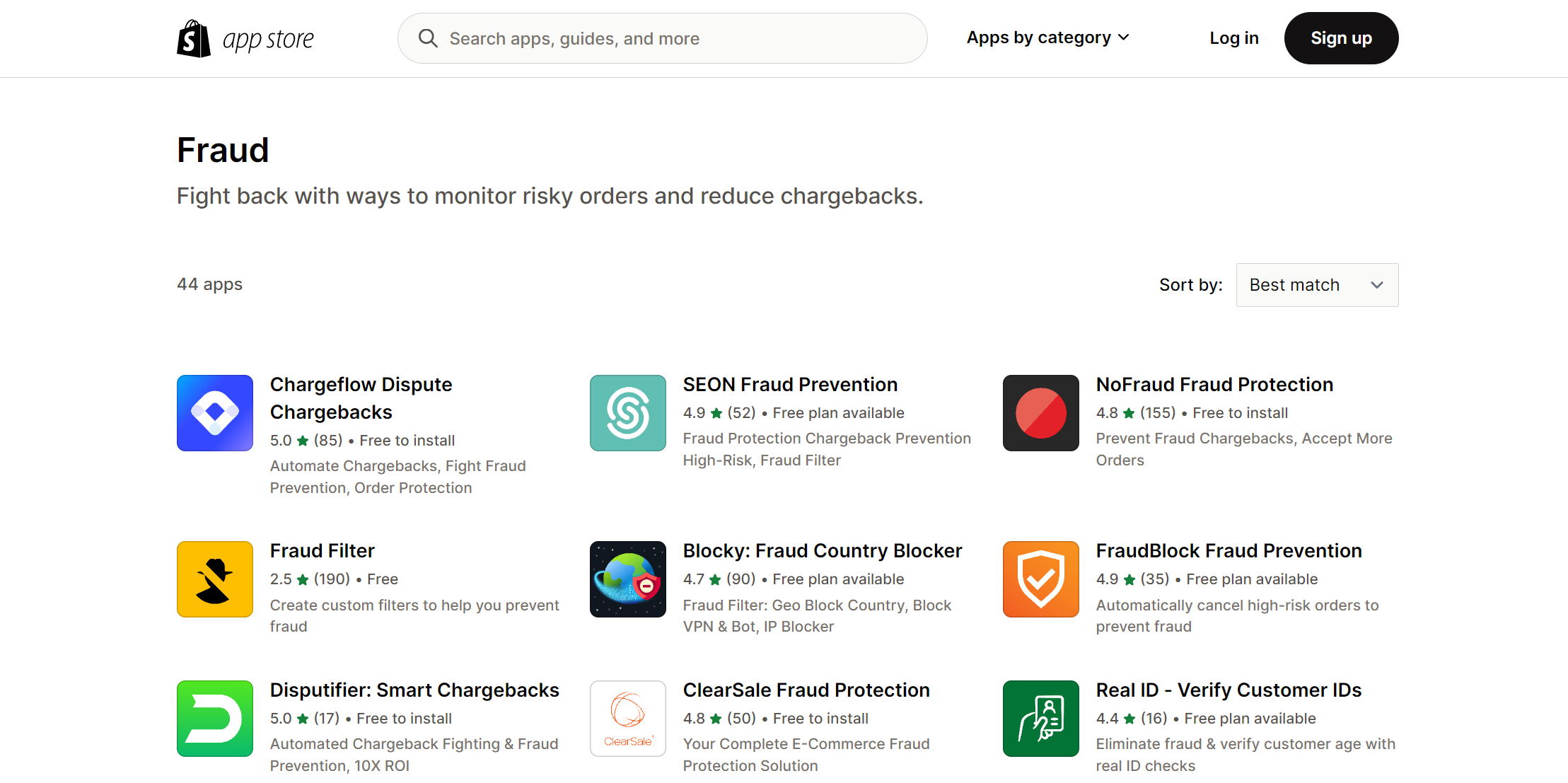
Fraud prevention apps will often scrutinize orders to a higher degree than the basic Shopify tools. This is especially useful if your store is a frequent target of fraud or if you’re selling more expensive items.
Many apps also offer other services like insurance on orders in exchange for a small percentage of the revenue collected. Meaning that even if you don’t win a dispute, the app will still pay you back the amount in full.
As we touched on earlier, not all disputes are accounted for by fraudsters. Sometimes customers aren’t happy with your store for a variety of different reasons.
For example, perhaps a customer’s parcel was lost in transit, or maybe their sister took it from the mailbox and subsequently forgot about it.
Whatever the issue, many disputes can be solved before they’re escalated to a full-blown chargeback. You can reach out to customers who’ve initiated disputes and try to resolve the issue if you’ve been at fault.
Make a habit of logging into your payment processing account and reviewing the pending disputes to see if they can be rectified without the need for a chargeback.
Because avoiding chargebacks will go a long way towards keeping you, your customers, and your payment processer happy with each other.
Learning how to manage high-risk orders is a skill every Shopify merchant needs to master.
Because left unchecked, risky orders can lead to a litany of chargebacks, damage to your bottom line, and harm your relationship with your payment processor.
A proper risk-mitigation system allows you to reduce the odds of a Shopify chargeback while still capturing the maximum number of legitimate orders.
So, start managing your high-risk orders today and enjoy less stress and more profits over the coming months.
Now over to you! How do you handle high-risk orders? Do you have a Shopify chargeback story worth sharing? Let us know in the comments below!
ProductReConvert has officially become Upsell.com. Here’s what’s changed, what stays the same, and what this means for your Shopify store.
 Marketing
You don’t need a huge budget to get your business or brand noticed. Our online marketing ideas for small businesses are designed to maximize ROI.
 Marketing
Personalizing your buyers journey is a fantastic way to boost conversions. Discover 6 simple ecommerce personalization tactics to try today.
Get eCommerce insights that convert
One email a month, practical strategies on conversion, AOV, retention, and customer experience.