 Product
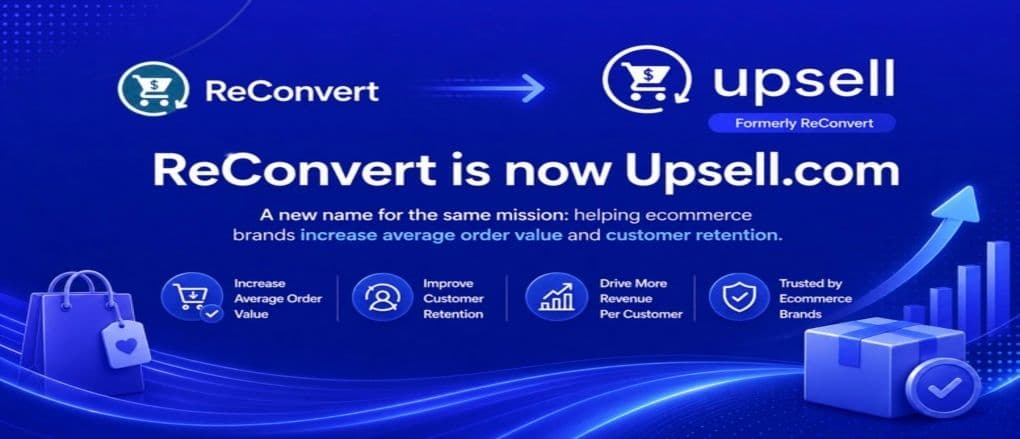
We have rebranded! ReConvert is now Upsell.com
ReConvert has officially become Upsell.com. Here’s what’s changed, what stays the same, and what this means for your Shopify store.
1 min read
In the world of eCommerce, branding can make all the difference between the stores that rise to the top and the ones that get left behind.
After all, without a strong brand to back up your product, customers don't have much reason to pick you over your competitors.
With that being said, creating a strong brand isn't very cut and dry, it's a complicated process.
In this article, we'll help you get through that process smoothly to start raking in customers from all over the web.
Without further ado, let's get right into it.
The problem with eCommerce branding is that you'll likely be starting your business in an industry that's already full of competitors.
And many of those competitors? They already have names for themselves.
To cut into your industry, you need to define values, products, and selling points that separate you from that crowd.
Today, we'll be doing that in three steps.
So, just as with any journey, let's kick off with step number one.
The first step of branding is your roots.
These are the pieces that make up the foundation of your brand and set it apart from the rest.
It involves market research, creating a presence, defining your values, and building a selling point that makes your company unique.
The first step towards crafting a brand that appeals to your audience is to develop an understanding of your customers themselves.
Once you develop a strong understanding of who you're selling to, you can create marketing messages that appear specifically to those groups.
The best way to do that is by creating buyer personas.
Buyer personas are imaginary customers that represent wide groups of your customer base.
Let's make a persona example up for a sports clothing brand:
Our persona's name will be John Myer.
He's a 24-year-old college football player who loves weightlifting, partying, and enjoying the outdoors.
His most common pain points with clothing brands are that they're too expensive to fit with his college budget, and they aren't durable enough to last through his active lifestyle.
His goal? To make it through college on his football scholarship and get drafted for the professional league.
Understanding these details about your customers helps you to make brand decisions that those customers will be happy with.
For a deeper guide on crafting your own buyer personas, check out this great guide on ecommerce buyer personas.
After you've taken the steps to understand your customer base, it's time to create a USP, or Unique Selling Proposition, that caters to that customer base.
Your USP is the reason(s) that a customer would pick you over one of your direct competitors.
For instance, let's look at a well-performing ecommerce brand - Robinhood:

Right on the front page, Farmer's Dog advertises its USP: healthier pet food.
The USP of The Farmer's Dog is that the food is healthier than your standard store-bought pet food.
Mainstream pet food brands include ingredients that aren't the most nutritious for animals. And The Farmer's Dog uses that as a pain point to hone in on.
In their, they tackled the pain point of worrying about pet health. Most of us don't know what's in our pet's food or how it'll affect them.
In your own brand, you should create a USP that solves a common pain point among your own audience.
Next, it's time to define what your brand stands for by showing off your values.
For this step, we'll use one of the best ecommerce examples out there: 4ocean.
Straight from its 'About Us' page, 4ocean makes its mission statement clear:
They're here to end the ocean plastic crisis.

The page opens with a video that describe the ocean plastic crisis, and how 4ocean is using their revenue to help combat it.
After the video, they write a piece that describes those values in further detail:

Through and through, 4ocean is a brand that stays true to its values and makes them known to customers.
In your own business, your mission statement, brand persona, and values give you an opportunity to show what you stand for and connect with your customers.
Here are some tips to make your value page a stronger one:
Social media marketing is a gold mine for online and physical stores alike.
One of the best things you can do for your brand early on is to start a social media presence as soon as possible.
It helps to know which platforms your customer base uses most often, and stick to those platforms.
An ecommerce store that sells footwear probably won't find much success on LinkedIn since it doesn't fit the target market, for instance.
Once you're set up on the ideal platforms, it's time to create posts that engage audiences and attract attention. Here are a few ideas that can give your brand some early traction:
A brand isn't just a collection of products or a store. Brands consist of everything your business does and stands for. From the way you greet your customers, to the colors that appear on your home page - Every one of these pieces culminate to form your brand.
And that brand identity is what separates your business from any of its competitors.
With that being said, let's talk about how you can craft a unique brand identity that supports your mission.
The essence of your brand is how it interacts with customers and prospects at every step of the buying process. Whether that's at the top of funnel, where consumers are just visiting your social media page, or in the checkout process - Your brand's voice plays a part in every single interaction.
Because of that, you'll need to create a brand tone and voice that stays consistent across every channel. Let's look at the brand Native as an example:

Native sells self care products, but the brand tone is one of the factors that makes the company unique.
Instead of a sterile or textbook tone, Native takes a fun, outdoors-inspired attitude towards its products. With the newest product line, they focus on the idea of vacation.
The homepage starts with "Welcome to Paradise," and there's an aura of summer vacation within all of the sentences. Words like "Summer" and "Refreshments" help to reinforce that idea.
So what exactly can you do to ensure your brand's voice stays consistent?
When someone visits your website, the first piece of information that they process isn't going to be the logo.
It won't be the 50% newcomers discount you're offering.
And it won't be your featured product.
Instead, the first thing any visitor will process on your site are the colors.
The colors of your brand form the very first impression that anyone will get. Which is why the color palette of any giant brand is no coincidence, it's a carefully planned decision.
Think of the classic yellow and red of McDonald's.
While it may seem like a coincidence that they company landed on those colors, there are very real reasons behind each one.
Yellow is not only the easiest color to spot from a distance, it's also a signal for warmth and comfort.
While red is commonly associated with danger, it's also a color that increases appetite and nudges customers to make impulse purchases.
Upsell.com helps you increase AOV with targeted offers across the full shopping journey, from product and cart to checkout, post purchase, and beyond.
A brand like Heights, on the other hand, goes with blue and green. The blue signifies focus, success, and a sense of trustworthiness. While the green product helps reinforce the idea that the supplement are healthy, natural, and good for you.

In your own brand, choose colors that incite the type of emotions that increase your customers' chance to stick around and buy. It's also useful to take a peek at competitor color schemes. Since it's the first impression, you'll want to make sure your brand colors differentiate you from the crowd rather than blend in with it.
One great tool to help you decide on a palette for your brand is coolors.

The tool helps you pick the best set of colors for your brand, and caters them specifically to your central colors.
To get the best use of Coolors, decide on a primary color that reinforces your brand values, then use the tool to help decide which colors best complement it.
While this isn't a full-fledged color guide, Canva has an excellent article that explains brand color theory in-depth.
Once you've decided on your colors, your values, and your brand's voice, it's time to decide on its face.
A brand logo isn't something that springs up instantly, it'll take some brainstorming and time to craft on that fits your company.
The most important factor to consider is whether or not your logo represents what your brand stands for.
Apple, for instance, uses a simple logo that communicates both the accessibility and streamlined design behind its products.
Amazon uses the simple A to Z arrow in their logo to represent that you can find any product from A to Z, on the Amazon store.
And Tushy uses a simple, clean design that fits with their brand tone and product without .

Once you have an idea for your logo, it's time to put it on paper. It's best to hire a professional designer from Upwork, Fiverr, or an independent website to get the best results.
But if you want to design the logo on your own, Canva has a great free tool to get started.
And for brand names, try Namlix. Give a tool a few details about your brand, and it'll give you a whole slew of ideas on what to name it.
Once your roots are established, it's time to kick your ecommerce brand growth into full gear.
Step number two is all about how you can set your ecommerce branding strategy on a course for long-term, sustainable success.
First and foremost, thriving brands always make sure that customers are satisfied with every interaction.
Brand names don't get huge because people dislike their products, the first requirement of a household name is that its customers are satisfied.
And to top it all off, building brand recognition is easier when your customers are raving fans.
Here are a few ways you can increase average customer satisfaction and exceed expectations:
Social media is overlooked far too often by newer brands.
But the great thing about platforms like Facebook and Twitter is that they provide an open place for new and old faces to make a name for themselves.
Posting regular, engaging content on social media is one of the most cost-effective ways a brand can get online traction, and it's a method that even the most household brands put into place every day.
You can think of each social media page as a full-fledged extension of your brand. Your Twitter page isn't just a social media channel, it's a critical piece that cements a place for your brand in consumers' minds.
Here's a simple post from Chipotle that's a great example of engaging content:

Nothing too complicated, just a prompt for followers to answer.
But posts like these are easily shareable and generate tons of easy engagement. To get the most value out of platforms like Facebook or Twitter, here are some things you can do to create a space for your brand:
The last step towards creating successful brands is using what you've built up and nurturing it over time.
Good branding practices + Time = A successful brand.
Here are some tips you can use to sustain your ecommerce brand into the foreseeable future.
Branding is all about creating a public image for your business that represents its values.
If you take actions that go against those values, any customers who felt emotionally attached to your mission are going to feel betrayed by the brand, or that your brand isn't true to its message. This is a common cause for customer attrition.
Take Tushy, for example:

Tushy is a lighthearted brand that uses the conservation of paper as a strong selling point behind its products.
If Tushy started selling its own toilet paper, it'd go against a huge part of its brand identity; it wouldn't be consistent.
The same could be said for 4ocean. If 4ocean started selling non-recycled, plastic-based products or packaging its products in plastic- It'd go against everything the brand stands for.
In your own store, practice consistency across all of your marketing channels and storefronts to avoid alienating your customer base.
One great way to keep people loyal to your brand is by incentivizing that loyalty.
Evy's Tree does a great job of this with a full-fledged loyalty program:

This program goes a step further than just a discount every few purchases. Evy's Tree sends out birthday points, rewards for engaging its social media page, and free shipping for its highest tier.
For your own business, consider building a detailed loyalty program that gives more rewards for long-term customers.
And lastly, it's important that you strive to stay ahead of the industry curve.
Customers won't stick around to a brand that's stuck in old ways, at least, not for long.
The best brands continue to move the needle forward by analyzing the competition and implementing changes to stay ahead of them.
Take Levi's, for example. Times and styles change, and if Levi's had stuck with their initial designs, they probably wouldn't be around today.

To keep up with styles becoming more minimal and streamlined, Levi's took a similar approach with the brand logo.
To keep your business from falling behind, you'll need to practice a similar strategy of pioneering changes in your own brand.
In essence, ecommerce branding is a three-step process:
Putting the tips in this post into place should put you on the right track towards staying competitive no matter which industry you're in.
And if you enjoyed this content, make sure to check out some of the other posts on our blog!
ProductReConvert has officially become Upsell.com. Here’s what’s changed, what stays the same, and what this means for your Shopify store.
 Marketing
Personalizing your buyers journey is a fantastic way to boost conversions. Discover 6 simple ecommerce personalization tactics to try today.
 Marketing
You don’t need a huge budget to get your business or brand noticed. Our online marketing ideas for small businesses are designed to maximize ROI.
Get eCommerce insights that convert
One email a month, practical strategies on conversion, AOV, retention, and customer experience.