.png)

La guía definitiva para el dropshipping con Shopify (ejemplos, productos, estrategias y más)

Shopify dropshipping is one of the simplest ways to start an ecommerce business without buying inventory upfront.
You do not need to rent a warehouse. You do not need to order hundreds of units before knowing if a product will sell. You do not need to pack boxes yourself.
Instead, you create a Shopify store, list products from a supplier, and when a customer places an order, the supplier ships the product directly to them.
That is why dropshipping continues to attract new ecommerce founders, creators, side hustlers, and even established brands that want to test new products without taking on inventory risk.
But there is one thing every new merchant should understand before starting:
Dropshipping is easy to launch, but it is not easy to win.
After working with 40,000+ installed Shopify stores at Upsell.com, we have seen a clear pattern. The stores that grow are not the ones that simply import trending products and run ads. The stores that grow build trust, choose better suppliers, improve their product pages, communicate clearly, and increase average order value with smart upsells, cross-sells, bundles, and post-purchase offers.
This guide will walk you through how Shopify dropshipping works, how to choose products, how to find suppliers, how to build a store customers trust, and how to improve profitability after launch.
What is Shopify dropshipping?
Shopify dropshipping is an ecommerce fulfillment model where you sell products through your Shopify store, but a third-party supplier stores, packs, and ships the products for you.
Here is the basic process:
- You create a Shopify store.
- You add products from a supplier, dropshipping app, print-on-demand app, Shopify Collective partner, or direct supplier relationship.
- A customer buys from your store.
- You collect payment through Shopify checkout.
- The order is sent to your supplier.
- The supplier ships the product directly to your customer.
- You keep the difference between what the customer paid and your total costs.
The important phrase is total costs.
Dropshipping profit is not just your selling price minus the supplier cost. You also need to account for shipping, payment processing fees, app fees, discounts, refunds, returns, customer support, and customer acquisition costs.
For example, if you sell a product for $39.99 and your supplier charges $14 including shipping, that does not automatically mean you made $25.99 in profit. You still need to subtract payment fees, ad costs, app costs, refunds, and any discount you offered.
That is why serious dropshipping merchants care about more than just finding a “winning product.” They care about conversion rate, average order value, repeat purchases, refund rate, and profit per order.
Is Shopify dropshipping still worth it?
Yes, Shopify dropshipping can still be worth it, but the old playbook is no longer enough.
Years ago, many stores could import products, use supplier photos, add a basic product description, run ads, and still generate sales. Today, customers are more careful. They compare stores. They check delivery times. They notice generic product pages. They are less likely to trust a store that looks rushed.
The better approach is brand-led dropshipping.
That means you can still use suppliers for fulfillment, but your store should feel like a real brand. You need clear positioning, useful product pages, honest shipping information, helpful customer support, and offers that make sense.
Weak dropshipping looks like this:
- Random products with no clear niche
- Copied supplier descriptions
- Low-quality product images
- Hidden shipping times
- Fake urgency
- No clear refund policy
- No email flows
- No upsell or bundle strategy
Strong dropshipping looks like this:
- A clear niche or customer problem
- Products that solve real needs
- Suppliers tested with sample orders
- Original product copy
- Clear delivery expectations
- Helpful FAQs
- Trustworthy policies
- Relevant product bundles
- Cart upsells and post-purchase offers
- A plan to increase average order value
The difference matters because dropshipping margins can be tight. If your entire business depends on one low-margin product and expensive ads, scaling becomes difficult. But if you build a better offer and increase the value of each order, the economics can improve quickly.
How does dropshipping on Shopify work?
There are three common ways to dropship on Shopify.
1. Use dropshipping apps
Dropshipping apps connect your Shopify store to supplier networks. They usually help you import products, sync inventory, send orders to suppliers, and manage tracking.
This is often the easiest option for beginners because it reduces manual work.
The downside is that many other merchants may have access to the same products. If you use the same supplier photos, same descriptions, and same offer as everyone else, it becomes hard to stand out.
That is why your product page, creative, niche, bundle strategy, and post-purchase flow matter.
2. Use Shopify Collective
Shopify Collective allows eligible Shopify merchants to sell products from other Shopify brands. This can be useful if you already have a store and want to expand your catalog with complementary products without buying inventory upfront.
For example, a skincare store could add beauty accessories. A fitness apparel store could add recovery tools. A baby brand could add nursery accessories.
This model can feel more brand-aligned than sourcing generic products because you are working with other Shopify merchants.
3. Work directly with suppliers
A direct supplier relationship takes more effort, but it can give you more control.
Once you know a product sells, you may want to contact the supplier directly to negotiate better pricing, faster shipping, custom packaging, or more reliable fulfillment.
Many successful stores start by testing products through apps and later move toward stronger supplier relationships once they have proven demand.
Pros and cons of Shopify dropshipping
Shopify dropshipping has real advantages, but it also has limitations.
Pros of Shopify dropshipping
Low upfront inventory cost
You do not need to buy inventory before launching. This makes it easier to test products without tying up cash in stock.
Fast to start
You can create a Shopify store, connect supplier apps, add products, and launch faster than a traditional ecommerce business.
Flexible product testing
You can test different products, offers, niches, and audiences before committing to bulk inventory.
Easy to expand your catalog
Dropshipping allows you to add related products quickly, which is useful for bundles, cross-sells, and upsells.
Good for learning ecommerce
Dropshipping teaches product research, conversion optimization, supplier management, customer support, paid ads, email marketing, and store operations.
Cons of Shopify dropshipping
Lower margins
Because the supplier handles storage and fulfillment, your product cost may be higher than buying inventory in bulk.
Less control over shipping
If the supplier ships late, sends the wrong item, or runs out of stock, your customer still blames your store.
Product quality risk
You need to order samples and test products before selling them at scale.
High competition
If you sell common products with generic copy, customers have little reason to buy from you.
Customer support responsibility
Even though your supplier ships the product, you are responsible for answering customers, handling delays, managing refunds, and protecting your brand reputation.
How to start Shopify dropshipping step by step
Step 1: Choose a niche
A niche is the market, audience, or problem your store focuses on.
Many beginners want to create a general store because it feels flexible. They want to sell pet products, kitchen tools, phone accessories, fitness gear, and beauty products all in one place.
The problem is that general stores are harder to trust.
A focused store is easier to brand, easier to write copy for, easier to advertise, and easier to optimize. You know who the customer is, what they care about, what objections they have, and what related products they might buy.
Examples of focused dropshipping niches include:
- Pet grooming products
- Travel organization
- Desk setup accessories
- Home storage solutions
- Baby convenience products
- Kitchen organization
- Beauty tools
- Fitness accessories
- Outdoor and camping accessories
- Car organization
- Hobby-specific accessories
A good niche should have a clear audience, multiple related products, content potential, and room for bundles or upsells.
Step 2: Research products
A good dropshipping product is not just trending. It needs to be easy to understand, easy to demonstrate, simple to ship, and profitable after costs.
Look for products with these qualities:
- Solves a specific problem
- Has a clear benefit
- Can be shown in photos or short videos
- Is lightweight
- Is not too fragile
- Has simple sizing or no sizing
- Has low compliance risk
- Has enough margin
- Has related accessories or bundle potential
- Is not easily available everywhere locally
Before adding a product to your store, ask yourself:
- Would I buy this from an unknown brand?
- Can I explain the benefit in one sentence?
- Can I show the product working in a short video?
- Is the shipping time acceptable?
- What objections will customers have?
- What could go wrong with this product?
- Can I offer a bundle or relevant add-on?
- Can I still make money after ads, refunds, and fees?
Products that are visual and problem-solving usually work better than products that need a long explanation.
For example, a drawer organizer, pet hair remover, travel pouch, cable organizer, or cleaning tool can be shown quickly. The customer sees the problem and understands the solution.
Step 3: Find reliable suppliers
Your supplier is one of the most important parts of your dropshipping business.
A weak supplier creates late deliveries, refund requests, chargebacks, bad reviews, and support tickets. A strong supplier makes your store easier to run.
When comparing suppliers, look at:
- Product quality
- Processing time
- Shipping time
- Tracking reliability
- Return policy
- Packaging quality
- Communication speed
- Inventory consistency
- Reviews from other merchants
- Ability to handle higher volume
Never scale a product before ordering a sample.
Supplier photos can make a product look better than it is. A sample order lets you test the actual customer experience. You can check the packaging, delivery time, product quality, instructions, and tracking updates.
If you sell mainly to the United States, consider suppliers with US fulfillment options. If you sell to Europe, consider EU-based suppliers or warehouses. Faster delivery can increase conversion and reduce support issues, even if the product cost is slightly higher.
Step 4: Build your Shopify store
Your store needs to look trustworthy before you send traffic.
At minimum, create:
- A clean homepage
- Product pages with original copy
- Contact page
- Shipping policy
- Refund and return policy
- Privacy policy
- Terms of service
- FAQ page
- About page
- Branded order confirmation emails
- Mobile-friendly checkout
Keep your design simple. You do not need a complicated theme. You need a fast, clear, mobile-friendly store that helps customers understand what you sell and why they should trust you.
Your homepage should answer:
- What do you sell?
- Who is it for?
- What problem do you solve?
- Why should someone buy from you?
- What should the visitor do next?
Your product pages should answer:
- What is the product?
- How does it help?
- What is included?
- How long does shipping take?
- What happens if the customer is not happy?
- Are there reviews or proof?
- Is there a bundle or better-value option?
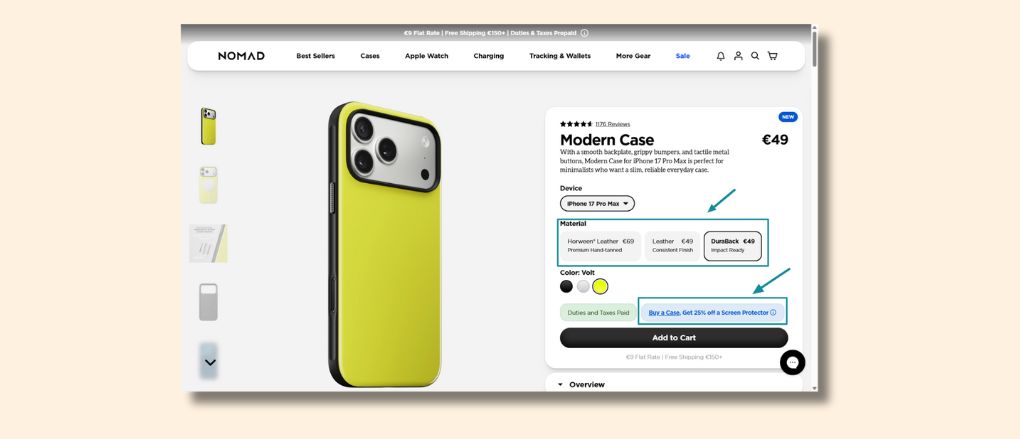
Step 5: Write product pages that convert
Many dropshipping stores lose customers because they use supplier descriptions.
Supplier copy is usually generic. It often describes the product in a dry way instead of explaining why the customer should care.
Weak product copy:
“Multifunctional premium storage bag made from durable material.”
Better product copy:
“Keep your chargers, cables, earbuds, and small tech accessories organized in one compact pouch for work, travel, and daily commuting.”
The second version is better because it shows the product in the customer’s life.
A strong product page should include:
- A benefit-driven headline
- Clear product images
- A short product summary
- Benefit bullets
- Use cases
- Specifications
- What is included
- Shipping information
- Return policy summary
- Reviews or testimonials
- FAQ section
- A clear add-to-cart button
- Relevant add-ons or bundles
The goal is not to make the page longer for no reason. The goal is to remove doubt.
Step 6: Set pricing and understand your margins
Pricing is where many dropshipping stores make mistakes.
A product can sell well and still lose money if your margins are too thin.
Your real costs may include:
- Supplier cost
- Shipping cost
- Payment processing fees
- Shopify subscription
- App fees
- Discounts
- Returns
- Refunds
- Ad spend
- Influencer costs
- Customer support
A simple way to think about profit:
Selling price - product cost - shipping - payment fees - discounts - refunds - acquisition cost = contribution profit
If you sell a product for $29.99 and your supplier cost is $12, you may think you have plenty of room. But if payment fees, discounts, and ads take another $14, your profit is much smaller.
This is why average order value matters.
If you can increase the average order from $29.99 to $42 or $55 with a bundle, cart add-on, quantity break, or post-purchase offer, your store may become much easier to scale.
Why average order value matters for dropshipping
Average order value, or AOV, is the average amount a customer spends per order.
For dropshipping stores, AOV is one of the most important metrics because customer acquisition can be expensive.
If you rely on paid ads, you need enough profit per order to cover the cost of getting the customer. A low AOV gives you less room to work with. A higher AOV gives you more flexibility.
For example:
A customer buys one travel organizer for $24.99.
Another customer buys a travel organizer, a toiletry pouch, and a cable case for $49.99.
The second order is more valuable, but it may not cost much more to acquire the customer. That is why bundles and upsells can make such a big difference.
At Upsell.com, we see this across thousands of Shopify stores. Merchants often focus heavily on traffic, but traffic is only one side of the equation. Once someone is already on your store, you need to make the most of that visit.
Ways to increase AOV include:
- Product bundles
- Quantity discounts
- Buy more, save more offers
- Product-page add-ons
- Cart upsells
- Free shipping thresholds
- Checkout upsells
- One-click post-purchase offers
- Thank-you page offers
- Order-status page offers
The best AOV strategy is relevant. Do not show random products. Show offers that make the original purchase better.
For example:
- If someone buys a pet grooming brush, offer a lint roller or refill pack.
- If someone buys a travel organizer, offer packing cubes or a second organizer.
- If someone buys a desk cable kit, offer a desk mat or under-desk tray.
- If someone buys a beauty tool, offer a cleaning tool or storage pouch.
- If someone buys a kitchen organizer, offer a multi-pack or matching storage item.
The offer should feel helpful, not pushy.
The best upsell funnel for Shopify dropshipping
A good dropshipping upsell funnel does not need to be complicated. Start with the most natural points in the customer journey.
Product page upsell
Before the customer adds to cart, show a better-value option.
Examples:
- Upgrade to the bundle
- Add a matching accessory
- Buy 2 and save
- Choose the premium version
This works well because the customer is already considering the product.
Cart upsell
In the cart, recommend a small related product or show a free shipping progress bar.
Examples:
- Complete your travel set
- Add one more and get free shipping
- Customers also bought this accessory
Keep cart offers simple. Do not distract customers from checkout.
Checkout upsell
For eligible stores, checkout upsells can work well for small, low-friction add-ons.
The best checkout offers are simple and inexpensive. The customer should not need to think too hard.
Post-purchase upsell
A post-purchase upsell appears after the customer completes checkout.
This is powerful because it does not interrupt the original purchase. The customer has already paid. If the offer is relevant, they can accept it with one click.
Examples:
- Add a second item at a discount
- Add refills
- Add a matching accessory
- Upgrade to a bundle
- Buy one as a gift
Thank-you page offer
The thank-you page is valuable because every customer sees it after buying.
You can use it to:
- Recommend related products
- Offer a limited-time discount
- Collect a survey answer
- Invite customers to join a loyalty program
- Promote social media
- Share product education
Order-status page offer
Customers often return to the order-status page to check tracking. That makes it another useful place to recommend products, show helpful content, or encourage repeat purchases.
This is especially useful for dropshipping stores because shipping times may be longer. If customers revisit the order page, you can use that attention productively.
Shopify dropshipping product examples
Pet grooming store
Audience: Dog and cat owners dealing with shedding.
Main product: Pet grooming brush.
Cross-sell: Reusable lint roller.
Bundle: Grooming brush, lint roller, and travel pouch.
Post-purchase offer: Discounted refill pack or second brush.
Content angle: How to keep your sofa fur-free between deep cleans.
This store works because the problem is clear, the product is easy to demonstrate, and the related offers make sense.
Travel organization store
Audience: Frequent travelers, remote workers, and digital nomads.
Main product: Tech cable organizer.
Cross-sell: Toiletry bag or packing cubes.
Bundle: Complete carry-on organization kit.
Post-purchase offer: Add a second organizer for work or a matching passport holder.
Content angle: How to pack for a five-day trip with only one carry-on.
This store works because travel products are easy to bundle and the customer often needs more than one item.
Desk setup store
Audience: Remote workers, students, and gamers.
Main product: Cable management kit.
Cross-sell: Desk mat, laptop stand, or under-desk tray.
Bundle: Clean desk starter kit.
Post-purchase offer: Add a second kit for another workspace.
Content angle: How to turn a messy desk into a focused workspace.
This store works because the audience buys multiple accessories to improve the same environment.
Kitchen organization store
Audience: Home cooks and people who want a cleaner kitchen.
Main product: Drawer organizer or storage container.
Cross-sell: Matching containers or labels.
Bundle: Full kitchen organization set.
Post-purchase offer: Add a second set for pantry or bathroom storage.
Content angle: Before-and-after kitchen organization ideas.
This store works because organization products are visual and naturally suited for multi-pack offers.
How to market a Shopify dropshipping store
Your marketing channel should match your product, audience, and budget.
Do not start with paid ads just because everyone talks about them. Start with the channel where your product can be explained most clearly.
TikTok and short-form video
Short-form video works well for products that are visual, surprising, satisfying, or easy to demonstrate.
A good video usually shows:
- The problem
- The product
- The result
- The offer
For example, a messy drawer becomes organized. A sofa covered in pet hair becomes clean. A tangled cable bag becomes neat. These transformations are easy for customers to understand quickly.
Meta ads
Meta ads can work for broad ecommerce testing, retargeting, and scaling proven offers.
But ads will not fix a weak product page. If your product images, copy, shipping policy, or offer are unclear, paid ads will only expose the problem faster.
Google Shopping
Google Shopping is useful when customers already search for the product.
It works best when you have clear product titles, competitive pricing, strong product data, and trustworthy product pages.
SEO
SEO is slower, but it can become a strong long-term channel for niche stores.
Create content around problems your audience already searches for. For example:
- How to organize a small kitchen
- Best travel accessories for carry-on packing
- How to remove pet hair from furniture
- Desk setup ideas for remote work
- Baby travel essentials checklist
SEO works best when your blog content naturally connects to your products.
Email marketing
Do not ignore email.
Email can help you recover abandoned carts, educate customers after purchase, collect reviews, promote bundles, and bring customers back for another order.
Useful email flows include:
- Welcome flow
- Abandoned cart flow
- Browse abandonment flow
- Post-purchase education flow
- Review request flow
- Win-back flow
Email is especially valuable because you do not have to pay again to reach the same customer.
Common Shopify dropshipping mistakes
Mistake 1: Selling random products
A scattered catalog makes your store harder to trust.
If your store sells dog brushes, phone chargers, kitchen gadgets, beauty tools, and car accessories all on the same homepage, customers may not understand what your brand stands for.
Choose a niche. Build around a customer problem.
Mistake 2: Using supplier descriptions
Supplier descriptions are not written to convert. They are often generic, duplicated, and feature-heavy.
Rewrite product pages in your own voice. Focus on benefits, use cases, objections, and outcomes.
Mistake 3: Hiding shipping times
Customers do not like surprises after checkout.
If shipping takes longer, say so clearly. Honest shipping expectations can reduce refund requests, support tickets, and chargebacks.
Mistake 4: Not ordering samples
Never scale a product you have not tested.
Order samples, check quality, review packaging, test shipping time, and make sure the product matches what your store promises.
Mistake 5: Competing only on price
There will almost always be someone cheaper.
Instead of racing to the bottom, compete with better positioning, clearer product pages, better bundles, faster support, and a stronger buying experience.
Mistake 6: Ignoring average order value
If your AOV is too low, paid traffic becomes harder to scale.
Use bundles, cart offers, post-purchase upsells, and thank-you page offers to increase the value of each order.
Mistake 7: Scaling ads too early
Do not scale ads just because you made a few sales.
Check your numbers first. Look at profit, refund rate, conversion rate, AOV, supplier reliability, and customer feedback.
Mistake 8: No post-purchase experience
The customer journey does not end after checkout.
Your thank-you page, order-status page, email flow, and support communication all shape whether the customer trusts your store again.
How to increase profit from Shopify dropshipping
Dropshipping stores usually have less margin than brands that buy inventory in bulk. That means profit optimization matters from the beginning.
Here are the most effective ways to improve profitability.
Improve your product page conversion rate
Better product pages help more visitors become customers.
Improve your product page by adding:
- Clearer product images
- Better above-the-fold copy
- Benefit bullets
- FAQs
- Shipping information
- Reviews
- Product videos
- Stronger calls to action
Small changes can make a big difference when you are paying for traffic.
Increase average order value
AOV is one of the fastest ways to improve store economics.
Use:
- Bundles
- Quantity breaks
- Product-page add-ons
- Cart upsells
- Checkout offers
- Post-purchase upsells
- Thank-you page offers
- Free shipping thresholds
At Upsell.com, this is exactly where we focus: helping Shopify merchants get more value from the customers they already worked hard to acquire.
Reduce refunds
Refunds hurt profit and cash flow.
Reduce refunds by improving product quality, setting clear expectations, showing accurate photos, avoiding exaggerated claims, and working with reliable suppliers.
Build repeat purchase flows
Even if the first order has tight margins, repeat purchases can make the customer profitable over time.
Use email, SMS, loyalty offers, refill reminders, product education, and related product launches to bring customers back.
Test creative angles
Sometimes the product is not the problem. The angle is.
Test different hooks:
- Problem-solution
- Before-and-after
- Gift idea
- Comparison
- Tutorial
- Unboxing
- Customer story
- Bundle offer
- Limited-time discount
The right creative can make the same product feel much more compelling.
Shopify dropshipping checklist
Use this checklist before launching your store:
- Choose a specific niche
- Define your target customer
- Research product demand
- Calculate product margins
- Compare supplier options
- Order product samples
- Test shipping times
- Create original product descriptions
- Add clear product images and videos
- Build a mobile-friendly Shopify store
- Add shipping, refund, privacy, contact, FAQ, and terms pages
- Set up payment methods
- Configure tax settings where needed
- Install analytics and tracking
- Test checkout on desktop and mobile
- Create abandoned cart emails
- Create post-purchase emails
- Add relevant product-page, cart, or post-purchase upsells
- Prepare support templates
- Launch with a small testing budget
- Review profit before scaling ad spend
Is Shopify dropshipping legal?
Dropshipping is generally legal, but you must follow the laws, tax rules, platform rules, and product regulations that apply to your business and your customers.
Important areas include:
- Business registration
- Taxes
- Consumer protection
- Product safety
- Advertising claims
- Privacy and data protection
- Import duties and customs
- Intellectual property
- Return and refund obligations
- Supplier agreements
Avoid counterfeit products, fake branded goods, unsafe products, misleading claims, and products that require special permits or compliance knowledge.
Be extra careful with categories like supplements, medical-style products, baby safety products, electronics, cosmetics, food, and anything that could create safety issues.
This is not legal advice. If you are unsure, speak with a qualified professional in your market.
Shopify dropshipping FAQ
Is Shopify good for dropshipping?
Yes. Shopify is a strong platform for dropshipping because it gives merchants the tools to build an online store, accept payments, install supplier apps, manage orders, customize the customer journey, and add conversion tools like upsells and email flows.
Can I start Shopify dropshipping with no money?
Dropshipping reduces inventory costs, but it is not free. You should still budget for a Shopify plan, domain, product samples, apps, branding, and marketing tests.
What is the best product for Shopify dropshipping?
The best product solves a clear problem, is easy to demonstrate, has healthy margins, ships reliably, has low compliance risk, and can be paired with relevant accessories or bundles.
How do I find Shopify dropshipping suppliers?
You can find suppliers through dropshipping apps, print-on-demand platforms, Shopify Collective, domestic supplier networks, or direct supplier relationships. Always compare quality, shipping time, return policy, and communication before scaling.
How much money can you make with Shopify dropshipping?
It depends on your niche, products, margins, traffic costs, conversion rate, refund rate, and average order value. Revenue alone does not matter. Profit matters.
Are post-purchase upsells good for dropshipping?
Yes, when the offer is relevant. A post-purchase upsell can increase order value after the customer has already completed checkout, which means it does not interrupt the original purchase.
What should I avoid dropshipping?
Avoid counterfeit products, fragile products, unsafe items, products with unclear compliance requirements, exaggerated claims, and products with poor supplier reviews or long shipping times.
Why do many dropshipping stores fail?
Many dropshipping stores fail because they sell random products, use generic supplier copy, hide shipping times, ignore product quality, spend too much on ads too early, and do not improve average order value.
Final thoughts
Shopify dropshipping is still one of the most accessible ways to start ecommerce, but the quality bar is higher than it used to be.
Customers expect better stores, clearer shipping, stronger support, and products that feel worth buying from a real brand.
The winning stores do not rely on luck. They choose a niche, test products carefully, work with reliable suppliers, build strong product pages, communicate clearly, and improve the economics of every order.
If you are building a Shopify dropshipping store, do not stop at getting the first sale. Think about the full customer journey: product page, cart, checkout, post-purchase offer, thank-you page, order-status page, email, and repeat purchase.
That is where a basic dropshipping store starts becoming a real ecommerce business.

.png)
